
TAI CHI FOR SENIORS
It's Never Too Late to Begin
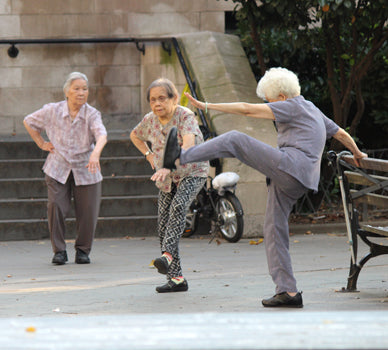
If you've been wondering whether you're too old to start Tai Chi, I'd like to reassure you.
You're not.
Tai Chi is for everyone, young or old.
One of the greatest lessons I've learned through more than 50 years of strength training and over 32 years of practicing Tai Chi every day is that movement becomes even more important as we age.
We naturally lose strength, balance, and flexibility if we stop using them. That's why I believe exercise should remain a lifelong habit. If practiced correctly, Tai Chi provides an excellent workout for your legs while improving balance, posture, coordination, and body awareness.
That's one of the reasons I believe Tai Chi is one of the best lifelong activities for seniors.
It doesn't ask you to compete with anyone else.
It simply meets you where you are today and encourages you to become a little steadier, a little stronger, and a little more confident tomorrow.
No matter what your age, it's never too late to begin your Tai Chi journey.
How I Found Tai Chi
When I was young, I was fascinated by martial arts. Growing up in New York during the 1970s, it seemed like karate and kung fu schools were opening in every neighborhood. I wanted to find a martial art that I could enjoy for the rest of my life.
One day, my father and I visited a Tae Kwon Do school to watch a class. I remember sitting there watching students perform incredible jumping and spinning kicks. It was exciting to watch, but even at a young age I found myself thinking,
"How could I still be doing this when I'm old?"
Right then, I realized it probably wasn't the right martial art for me.
Years later, when I was 31, I had the opportunity to take my first Tai Chi class.
I didn't know very much about Tai Chi, but I did know one thing that fascinated me. Instead of meeting force with force, Tai Chi teaches you to borrow your opponent's energy and redirect it.
One of my favorite television shows growing up was Kung Fu with David Carradine. I still remember a scene from the pilot episode where Caine effortlessly redirected an attacker's force using nothing more than a mug. I remember thinking, I want to be able to do that someday.
That idea immediately captured my imagination.
I remember thinking, this is something I can continue learning for the rest of my life.
From my very first class, I felt like a kid in a candy store. I wanted to learn everything I possibly could about Tai Chi.
About a year and a half into my Tai Chi journey, I had reached the point where I was constantly asking questions. One day, Sensei Howard Pashenz, my first Tai Chi teacher, looked at me and said something I'll never forget:
"What you want to know, I don't know. Please seek a more qualified Tai Chi teacher."
At first, I was surprised. Looking back, I realize what an incredible act of honesty and humility it was. Instead of pretending to have all the answers, he encouraged me to continue learning from others. That advice shaped the way I've approached Tai Chi ever since. Even after more than 32 years of daily practice, I still consider myself a student.
He also gave me another piece of advice that I still hear in my mind, even though he has passed away.
When I asked him about practicing Tai Chi every day, he smiled and said,
"Anyone can be a couch potato. What makes YOU different from everyone else?"
I've never forgotten those words.
Even today, whenever I don't feel like practicing, I hear his voice in my mind.
Then I get up and practice.
His advice shaped the rest of my Tai Chi journey.
Throughout the years, I've continued learning from experienced teachers, asking questions, and deepening my understanding of Tai Chi.
More than 32 years later, I'm still learning.
Every practice teaches me something.
Sometimes it's improving a posture. Sometimes it's relaxing a little more. Sometimes it's discovering a detail I had overlooked for years.
That's one of the greatest gifts Tai Chi has given me.
No matter how long you've been practicing, there is always something new to learn.
Why Tai Chi Is So Popular Among Seniors
Tai Chi is often described as moving meditation because it combines slow, relaxed movements with mindful breathing and focused attention.
Unlike many forms of exercise, Tai Chi doesn't rely on speed, impact, or physical strength. Instead, it teaches you how to move with balance, coordination, proper posture, relaxation, and body awareness.
That gentle approach makes it appealing to many older adults who want to stay active without placing unnecessary stress on their joints.
One of the biggest misconceptions about Tai Chi is that because it looks easy, it must not accomplish very much.
In reality, once you begin learning from a qualified teacher, you'll quickly discover that Tai Chi is anything but easy.
The slower you move, the more aware you become of your posture, balance, breathing, weight shifting, and body mechanics.
Tai Chi isn't a mindless dance.
If practiced correctly, it provides both physical and mental benefits that continue to develop throughout your life.
One day I visited a Tai Chi class at a local senior center because I was curious to see how it was being taught. I was hoping to see students learning the same fundamentals that had been emphasized throughout my own training—posture, body mechanics, balance, relaxation, and the purpose behind each movement. Instead, I watched students simply following along without any explanation, and it didn't resemble any Tai Chi form I had ever studied. I left appreciating even more how fortunate I had been to learn from teachers who encouraged questions, explained the details, and never stopped learning themselves.
That experience reinforced something I've believed for years:
Choosing the right teacher matters.
Potential Benefits of Tai Chi
Everyone's experience is different, but many people who practice Tai Chi regularly report improvements in both their physical and mental well-being.
Potential benefits include:
- Improved balance and stability
- Better posture
- Increased flexibility
- Greater coordination
- Stronger legs
- Improved circulation
- Better body awareness
- Reduced stress
- Better sleep
- Increased confidence while moving
- Improved focus
- A greater sense of calm
- Opportunities to build friendships through local classes
For me, one of the greatest benefits has simply been developing the habit of moving every day.
Small improvements practiced consistently often lead to remarkable changes over time.
You're Not Too Old to Learn Something New
One of my favorite things about helping teach Tai Chi for more than 20 years was sharing knowledge that helped students learn something faster than it took me to learn.
Some students arrived enthusiastic but never returned after their first class.
Others found the movements overwhelming.
If that's you, don't give up.
Tai Chi takes patience.
After a few months, you'll probably be moving with more confidence than you ever expected.
Tai Chi isn't about being perfect.
There is no perfection in Tai Chi.
There is only continual improvement.
Every practice becomes another step forward.
Start With the Basics
If you're completely new to Tai Chi, I recommend beginning with our Start Here page.
There you'll learn:
- What Tai Chi is
- The major styles of Tai Chi
- What to expect during your first class
- Common beginner questions
- How to begin with confidence
Starting with a solid understanding makes your first class much more enjoyable.
Finding a Good Teacher
If there's one recommendation I make more than any other, it's this:
Learn from a qualified instructor whenever possible.
After helping teach students for more than 20 years, I've seen firsthand how much easier Tai Chi becomes when someone can gently correct your posture, explain body mechanics, and answer your questions.
Look for a teacher who explains:
- Why movements are performed
- Proper posture
- Body mechanics
- Weight shifting
- Balance
- Relaxation
- Martial applications
A good instructor should help you understand why you're performing each movement, not simply ask you to copy what they are doing.
Choosing the right teacher is one of the most important decisions you'll make. Don't feel obligated to join the first introductory class you try. Take the time to observe a different classes, ask questions, and find an instructor whose teaching style matches the way you learn.
Should You Learn From Videos?
Videos can be a wonderful introduction to Tai Chi.
They allow you to see different styles and become familiar with the movements before attending a class.
However, I don't recommend learning exclusively from videos.
One of the most important parts of Tai Chi is developing proper posture, body mechanics, relaxation, and structure.
Those are much easier to learn when an experienced instructor can observe your movements and make small corrections.
Once you've developed a good foundation, books and videos become excellent resources for continuing your learning.
While nothing replaces learning from a qualified instructor, a good Tai Chi book can help reinforce what you're learning in class. I've put together a list of Tai Chi books that I believe are worth adding to your library.
If you'd like to learn more before attending your first class, read our recommended Tai Chi Books page.
Tai Chi Is More Than Exercise
Many people begin Tai Chi hoping to improve their balance or stay active.
Those are wonderful reasons to start.
But over time, many discover something much deeper.
Tai Chi teaches patience.
It develops awareness.
It encourages you to slow down and become fully present.
For me, Tai Chi became much more than exercise.
It became a daily practice that shaped how I approached life.
It also became one of the tools that helped me overcome years of panic attacks and anxiety.
If you'd like to read that story, I invite you to visit Can Tai Chi Help with Anxiety? My Personal Journey to Calm.
I hope my experience encourages anyone facing similar challenges.
Frequently Asked Questions
Is Tai Chi safe for seniors?
For many people, yes. Tai Chi is well known for its slow, controlled, low-impact movements. If you have existing health concerns, consult your healthcare provider before beginning any new exercise program.
Do I need to be flexible?
Not at all.
Improved flexibility develops naturally with consistent practice.
You don't need to be flexible before you begin.
What if I have poor balance?
Many people begin Tai Chi because they want to improve their balance.
A qualified instructor can modify movements when necessary and help you progress safely at your own pace.
How often should I practice?
The best practice schedule is the one you can maintain consistently.
Even five or ten minutes each day can become a lifelong habit.
I've practiced Tai Chi daily for more than 32 years, and consistency has always been far more important than practicing for long periods once in a while.
Begin Where You Are
One of the things I appreciate most about Tai Chi is that it doesn't care how old you are.
It doesn't compare you with anyone else.
It simply asks you to begin where you are today.
I've met people who started Tai Chi in their 60s, 70s, and even later. None of them wished they had waited longer.
If you're thinking about starting, don't worry about becoming perfect.
Just take the first step.
Years from now, you'll likely be grateful that you did.
Your journey, our shared path.™